“The universe is not just describable by computation. It is a computation.” – David Deutsch
Why Computation Matters in the Theory of Everything
In Deutsch’s worldview, computation isn’t just something that happens inside your laptop. It’s a universal principle, a process embedded in the very structure of reality.
In other words, the universe doesn’t just contain computers. It is one.
This idea links directly to the other strands of reality:
- Quantum Theory tells us the rules of the game
- Epistemology explains how we find better algorithms (better knowledge)
- Evolution shows how those algorithms can improve over time
Without computation, there’s no process for how knowledge is physically instantiated, stored, and evolved.
Everyday Computation vs. Cosmic Computation
When you think of computation, you might imagine:
- Your phone is calculating the fastest route to the airport
- Google translates text into another language
- A game rendering a 3D world
But in Deutsch’s framing:
- A planet computing its orbit is a computation
- A gene mutating and propagating through a population is a computation
- Even the interaction of two subatomic particles is computation, obeying the laws of physics like a program running in the background
Analogy: Imagine the universe as a giant simulation engine, where every physical interaction is just another line of code being executed
The Church–Turing Principle
One of Deutsch’s key contributions was extending the Church–Turing thesis into physics.
Classical Church–Turing Thesis:
Anything that can be computed by any effective process can be computed by a Turing machine.
Deutsch’s Extension:
Every physical process can, in principle, be simulated by a universal computing device, even quantum processes.
This means:
- Computation is a physical phenomenon, not an abstract one
- If the laws of physics allow it, it can be computed
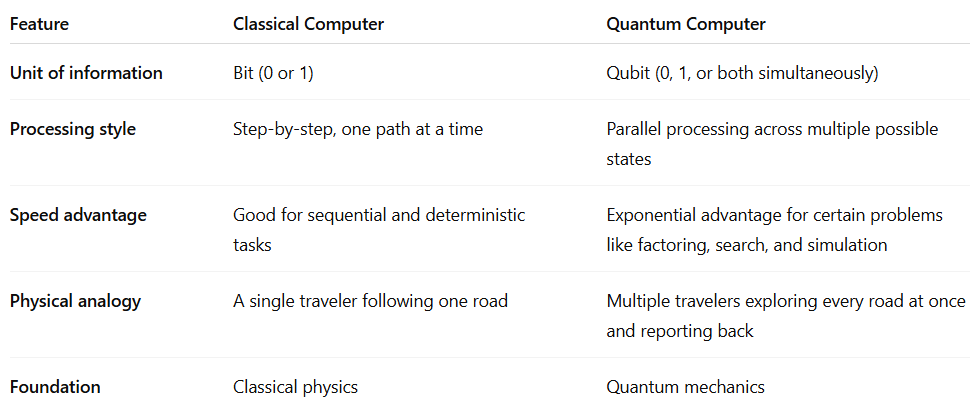
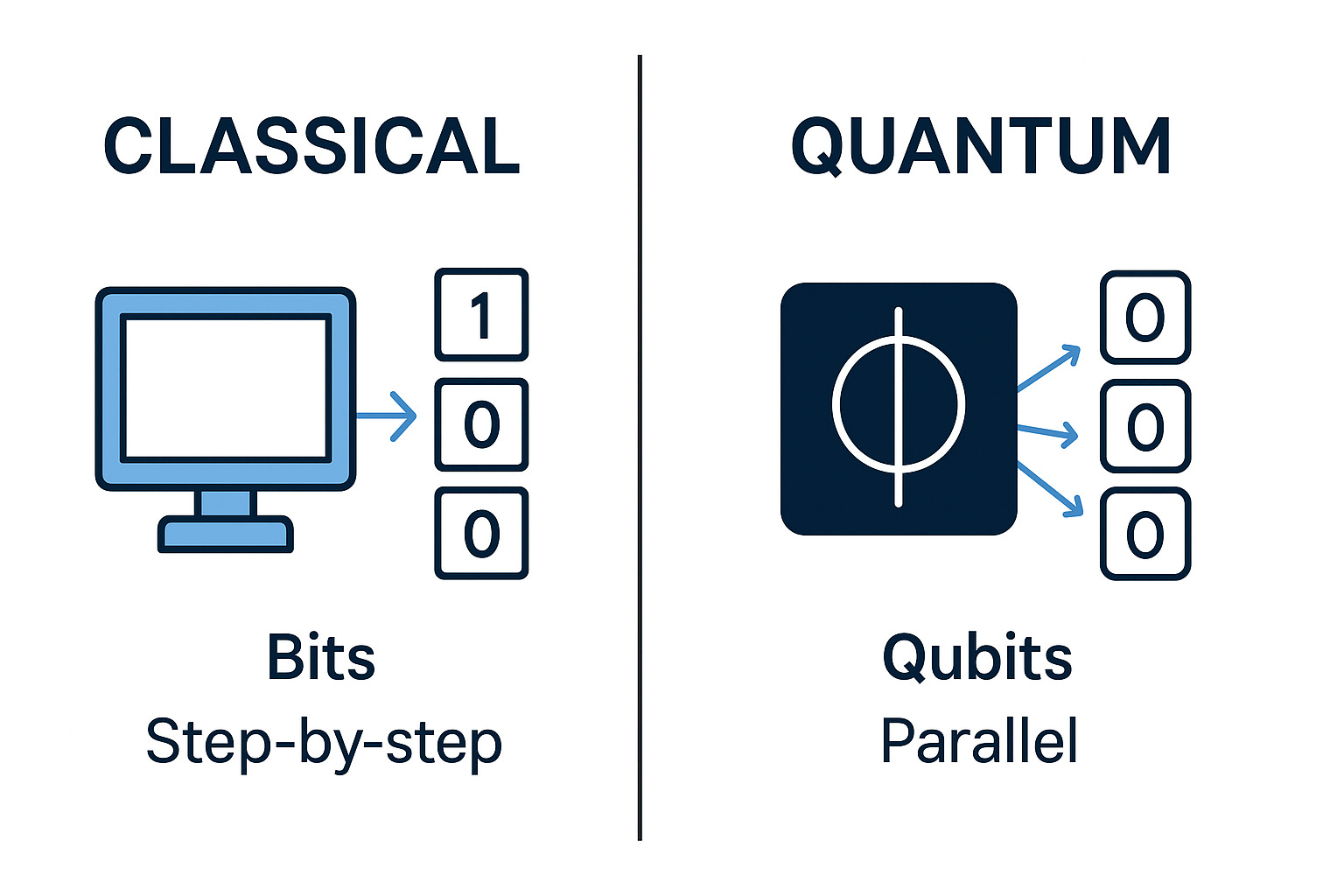
Classical vs Quantum Computation
Here’s how the two differ:
Why Deutsch Links Computation to the Multiverse
In classical computation, every calculation follows a single path.
In quantum computation, multiple branches of the multiverse carry out different parts of the calculation, and the results are combined.
For Deutsch, this isn’t a metaphor. It’s literally what’s happening. Without the Many-Worlds quantum theory, the power of quantum computing has no physical explanation.
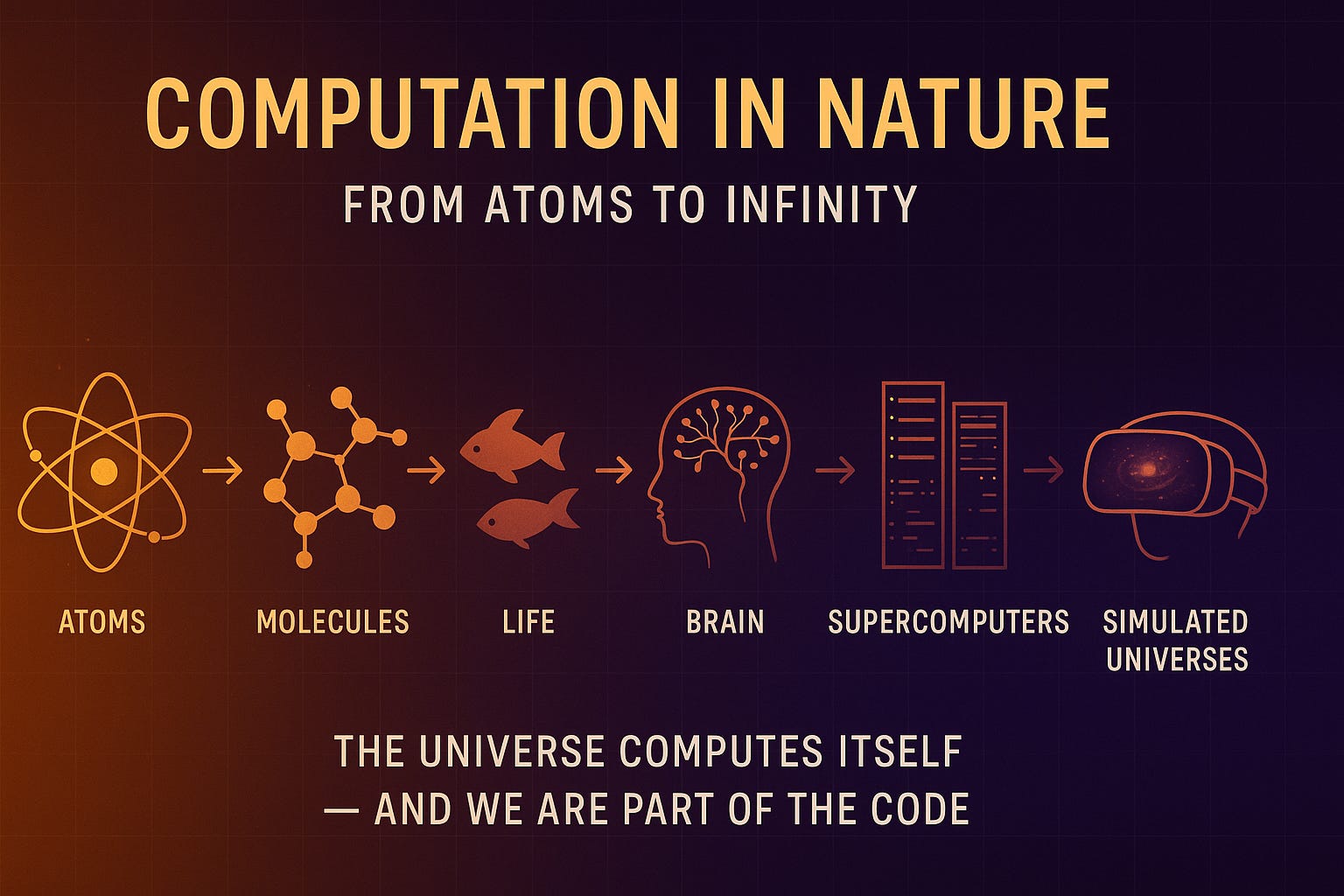
Computation in Nature
Examples of natural computation:
- DNA replication: The genetic code is a data storage and error-correction system
- Neural processing: Your brain is a massively parallel computer, integrating signals, memories, and predictions
- Planetary systems: Gravity “computes” the paths of planets in real time
In this view, every physical process is an information process
Where This Concept Is Useful
- Physics: Helps unify laws as algorithms that describe the universe
- Biology: Treats evolution as an information-processing system
- Engineering: Guides the design of quantum algorithms and future AI
- Philosophy: Bridges the gap between abstract mathematics and physical reality
Classical vs Quantum Computing
Computation in Nature
Glossary As Everyday Analogies
- Computation: A process of transforming input into output using rules
Like following a recipe to turn raw ingredients into a dish
- Turing Machine: A simple abstract model of a computer
Like a mechanical cook that can follow any recipe if given enough time
- Qubit: Quantum version of a bit, existing in multiple states at once
Like a coin spinning in the air — both heads and tails until caught
- Church–Turing Principle: Anything that can happen in the physical world can be simulated by a computer
Like saying any story that can be told can be written down in some language
What This Means for You
- The universe runs on code: Understanding that every process is computational changes how we think about science and problem-solving
- We can simulate reality: If something is physically possible, it can be modeled and tested virtually before building it in reality
- New tools for progress: Quantum computing, bioinformatics, and AI are all applications of this universal principle
Where We Go Next
In Deutsch’s Four Strands, computation shows us how the universe runs its processes. But knowing the “how” isn’t enough; we also need to understand how those processes evolve.
That’s where we turn next: Evolution, how both biology and culture use variation and selection to create knowledge.