Products aren’t just gadgets on shelves. They’re also the apps we open, the courses we take, the music we stream. If it solves a problem, meets a need, or adds value to someone’s life, it’s a product.
But not every product leaves a mark. Plenty just get the job done. A rare few stop you in your tracks and make you go: Wow. That wow factor doesn’t come from more features or flashy design; it comes from experience, impact, and delight.
A product becomes memorable when it:
- Solves a problem effortlessly, like Uber transformed transportation
- Delights unexpectedly, maybe through small details or intuitive design
- Feels personal and intuitive, making users feel it was made for them
- Builds trust and reliability, so people come back repeatedly
Not all products are created equal. Some products just do their job. Others stick with you. Here’s a simple contrast between an ordinary product and one that truly wows.
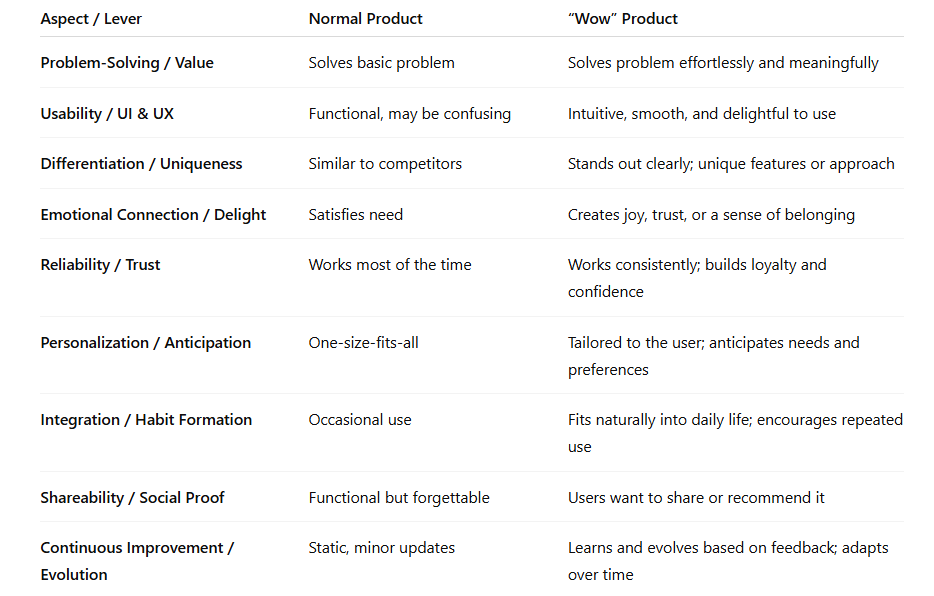
The “wow” factor comes from specific levers that product managers can intentionally influence. These levers show how a product earns trust and fits into someone’s life. Get them right, and people don’t just use the product; they stick with it.
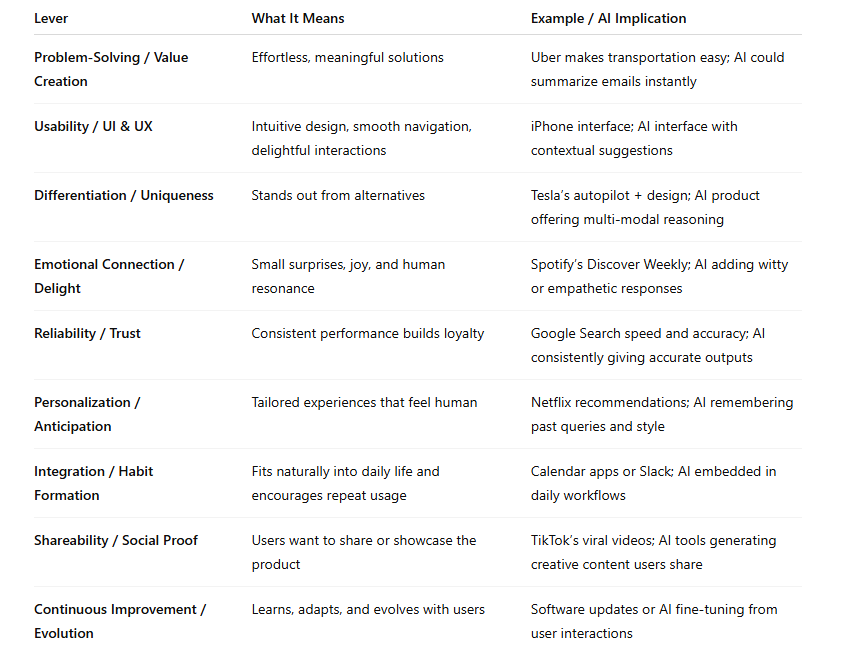
UI/UX is a critical lever, but it works best when combined with emotional impact, trust, personalization, and integration.
Let’s put these levers into context. Take Spotify. It didn’t just give people access to music; it made the whole experience feel personal and a little addictive.
- Every Monday, users get fresh playlists built just for them. That simple habit keeps people coming back
- The recommendations don’t just work; they surprise you, making discovery fun
- And when you find something new, it’s easy to share, so your personal joy becomes a social moment
Look at the big tech hits: iPhone, Google, Spotify. They didn’t just work, they hooked people. Put them next to AI products today, and the gap jumps out.
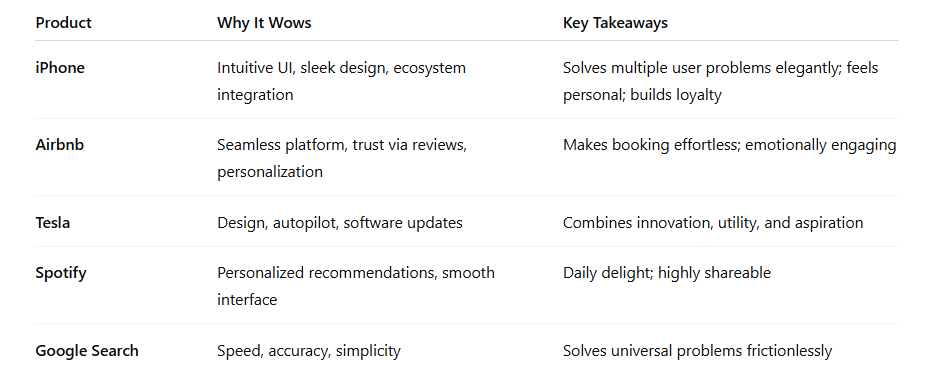
AI tools are great at solving problems and standing out, but stumble on the more human stuff: connection, trust, delight. Here’s a snapshot of where they shine and where they fall short.
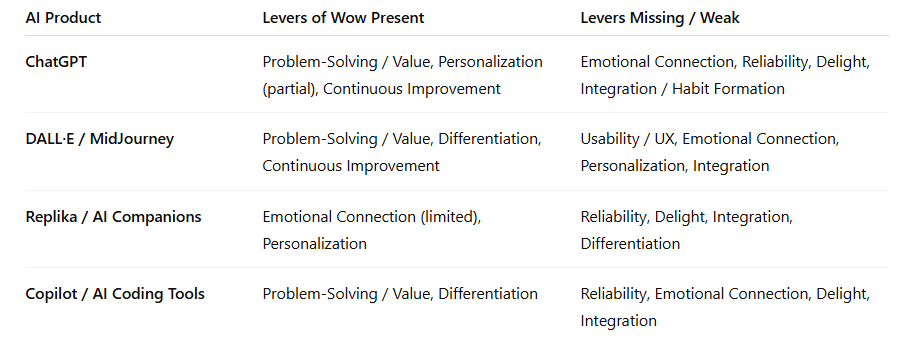
Key insight: AI products are strong in problem-solving and differentiation but often miss emotional connection, delight, and integration, leaving room for next-gen innovation.
If AI plugs its gaps, it could move from being a handy tool to something unforgettable: an assistant that feels reliable, personal, and maybe even a little delightful.
What the next wave of AI products should feel like:
- Emotional smarts → not just answering, but catching tone, mood, and context from past chats
- Dependable → no surprises, it just works the same way every time
- A touch of delight → little details, small surprises, feedback that feels natural
- Invisible integration → slips into your workflow instead of sitting on top of it
- Personal without being creepy → knows what you need, almost like a good assistant, but doesn’t overstep
- Clear and honest → shows how it got to an answer and doesn’t mess with your trust
User experience example:
- AI summarizes emails, schedules, or designs in a style tailored to you
- Anticipates next steps, reducing friction and increasing delight
- Users return naturally, forming habits and emotional attachment
Product managers use frameworks to design, prioritize, and iterate products that wow users. These frameworks map directly to the levers of wow.
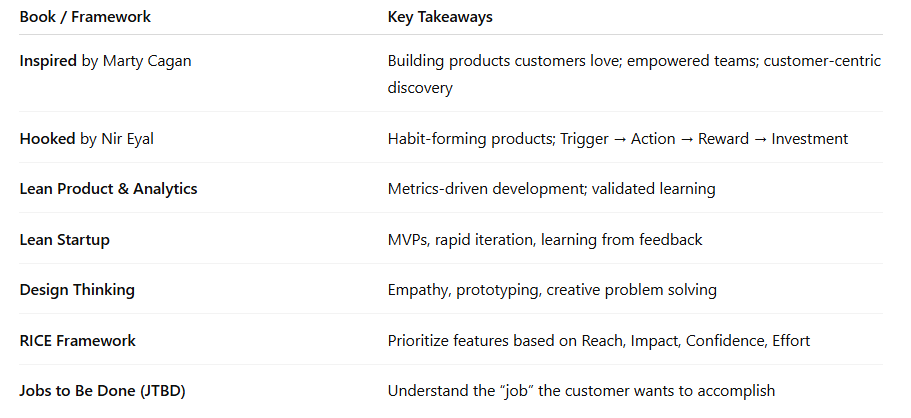
Levers of wow map directly to PM thinking: empathy, delight, prioritization, continuous iteration, and integration.
Good design matters, but it’s not enough. The products we remember usually also hit on trust, emotion, and that little spark of delight that makes them feel personal.
Classic tech products and next-gen AI can wow users when these levers are fully leveraged.
What’s the last product that actually made you say ‘wow’? Now, imagine if an AI pulled that off.