Some things don’t just live in memory; they echo. They stay with you in ways you can’t quite explain, like a familiar raag at dawn, or a voice that refuses to leave your head. For me, that echo is the sound of abhangs, verses in praise of Lord Vitthala, that I grew up listening to, day after day, playing softly on the radio as part of our daily routine.
I didn’t know it then, but those devotional verses, simple, repetitive, full of soul, were my first introduction to a world much larger than music. They were tied to a living, breathing tradition that passed through ears and generations of footsteps: the Waari.
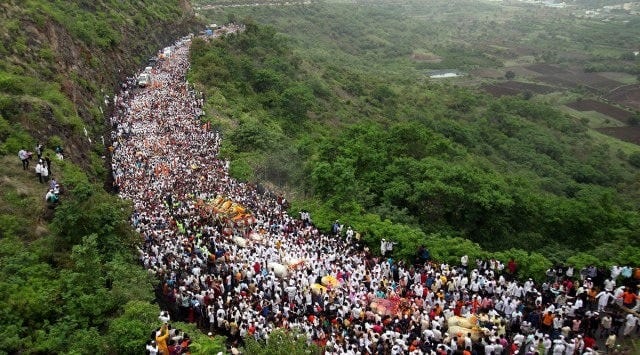
If you’ve lived in Pune, you don’t need a calendar to tell you when the Waari is near. You know. One morning, usually around June or July, you’ll see them: Warkaris in white dhotis and sarees, carrying tulsi pots on their heads, singing as they walk. Barefoot. Smiling. Unstoppable.
I watched them every year. I didn’t fully understand where they were going or why, but I was fascinated. Their rhythm, silence, unity; it felt like watching something timeless.
Later, I came to understand that these weren’t just folksongs. Sant Tukaram, the great poet-saint of Maharashtra, wrote over 5,000 abhangs, giving voice to the voiceless and bringing spirituality to the common man. His compositions laid the foundation for a distinct musical form that sits at the intersection of Bhakti and Hindustani classical music.
Many of our legendary vocalists, from Sudhir Phadke to Kishori Amonkar, have kept the abhang tradition alive. But for me, there was always one name that defined this world: Bhimsen Joshi.
Two of my favourite abhangs
- Majha Mahen Pandhari by Bhimsen Joshi
- Bolava Vithal, Pahava Vithal by Kishori Amonkar
There’s no way to describe this without it sounding like a dream: Bhimsen Joshi, singing in a small Ganesh temple inside Saras Baug, during Ganesh Chaturthi, at 5 AM, without a mic, to a crowd that didn’t need one.
I was three feet away. No fanfare, no tickets, no fuss. Just the voice. Raw, commanding, soaked in devotion. It cut through the morning silence and lodged itself somewhere deep inside you.
They say music can be a form of prayer. That morning in Saras Baug, it was the prayer.
People often ask why the Waari feels so emotional, even if you’ve never done the full walk. For me, it’s because it’s been around me all my life, in the verses I heard growing up, in the lanes of Pune, in the rhythmic clap of Warkaris walking, and in that echo of Bhimsen Joshi’s voice, which still plays in my mind like it’s right next to me.
I’ve carried all this for years, the music, the memories, the unanswered questions. And maybe that’s why the Waari has always been more than just an event on the calendar. It’s a feeling. A call to return. Not just to a place, but to a part of yourself that still believes in walking for something bigger than comfort, singing, and listening to the voices that shaped you.
And so I write this. To remember. To remind. And maybe, just maybe, to walk a little closer next time.
A back story on why this has been playing on my mind.
A 700-year-old tradition in which three lakh devotees participate, walking for twenty-one days to reach the temple town of Pandharpur. It is a sight to be experienced by walking with pilgrims, known as Warkaris.
The two main Palkhis start from Alandi (Dnyaneshwar) and Dehu (Tukaram). Over twenty-one days, they travel more than 250 km on foot, passing through towns like Pune, Saswad, Jejuri, Lonand, Malshiras, and Wakhari, before reaching Pandharpur on Ashadhi Ekadashi.
At its heart, the Waari is more than a pilgrimage:
- Egalitarianism: People from all walks of life, rich and poor, urban and rural, walk together without hierarchy
- Discipline: Despite its enormous numbers, the Waari is known for its peaceful and orderly movement
- Service: Villagers en route offer free food, water, and shelter, a great example of community service
- Simplicity: No extravagance, Warkaris walk barefoot, wear white dhotis/sarees, and carry a tulsi sapling on their heads
The Waari’s origins date back more than 800 years, to the Bhakti Movement, a spiritual revival that prioritized love over fear in one’s relationship with God, equality over caste, and devotion over ceremony.
This tradition was founded by two key figures:
- Sant Dnyaneshwar (1275-1296 CE)
Dnyaneshwar, a poet-saint and spiritual genius from Alandi, translated the Bhagavad Gita into Marathi (Dnyaneshwari), enabling everyone, irrespective of caste or social status, to have access to spiritual knowledge.
I found Dnyaneshwari, which focuses on devotion and spirituality, a difficult read. The other one is Tilak’s Gita Rahasya, which emphasizes action and pragmatism. Two of the most popular Gita interpretations in Marathi literature.
- Sant Tukaram (1598–1650 CE)
A Dehu farmer-poet who promoted social justice, compassion, and inward devotion in his abhangs, or devotional lyrics, which are still recited today.
The Varkari Sampradaya, a devotional group that worships Vitthal and leads a straightforward, moral life, was founded on their devotion to Vitthal (Vithoba), the revered deity of Pandharpur.
The Waari, as a mass pilgrimage, is thought to have begun in a more organized form during the 13th-14th centuries. However, it was not until 1820, during the British colonial era, that the Waari assumed its current form.
- Haibatrav Baba Arphalkar, a courtier and devotee from the princely state of Gwalior, formalized the practice of carrying the palki (palanquin) of Sant Dnyaneshwar from Alandi to Pandharpur.
- Later, the Tukaram Palkhi from Dehu was also introduced, and the tradition of multiple Dindis (groups of pilgrims) walking together, playing instruments, and singing abhangas started
Since then, the Waari has continued unbroken, through famines, epidemics, and even during colonial rule, becoming a powerful act of resistance, community, and faith.
Every year, when monsoon clouds gather over Maharashtra and the air fills with the sound of abhangs and taals, lakhs of devotees begin a journey like no other — the Pandharpur Waari. This year, I decided to stop watching from the sidelines and step into the dust-laden, soul-stirring path myself. And what I experienced was far more than a pilgrimage; it was a lesson in devotion, humility, and human connection.
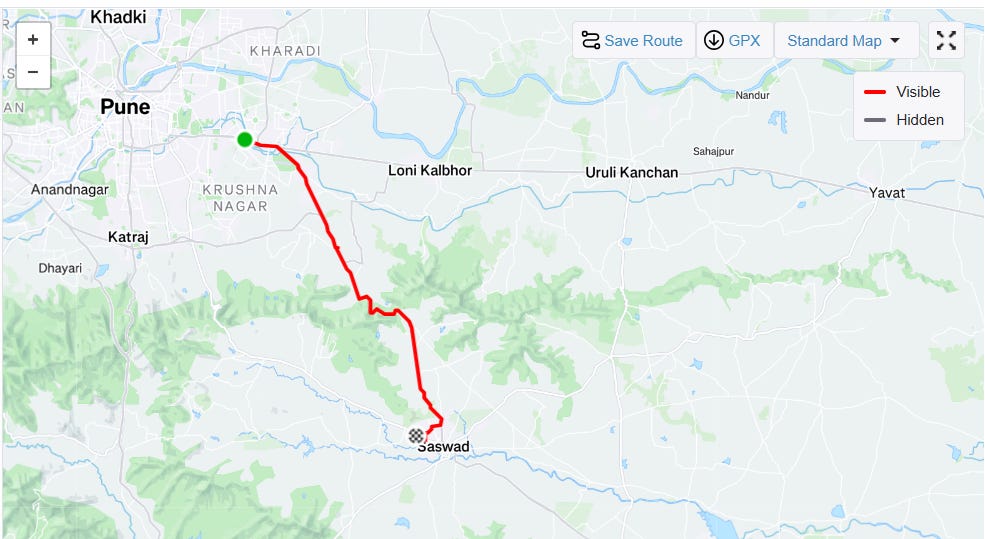
When I joined the Warkaris in Hadapsar for the Hadapsar – Saswad tappa, as they call it, I wasn’t sure what to expect. I had read stories, but nothing prepares you for the sight of thousands of people moving in unison, chanting “Mauli Mauli,” walking not just towards Pandharpur, but towards something deep inside themselves.
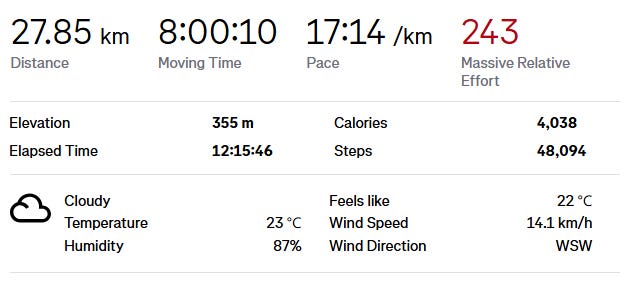
I walked 28 KM on a hot and humid day, and sometimes my legs ached. Yet, every step was lighter than the one before. There’s something mystical about walking with people who carry more than just luggage; they carry faith, songs, stories, and generations of belief.
As the stories go around, if rain begins to pour, instead of taking shelter, the Warkaris dance. Old women, young kids, farmers, city folks, all swaying together as if the clouds were just another musical instrument sent by Vitthal himself.
What moved me most was the hospitality of the people along the route. Total strangers distributing food and water and opening their hearts. This isn’t just a march; it’s a community built on seva (service) and samata (equality). There were no VIPs here, no hierarchies. We were all just devotees; dusty, tired, yet at peace with ourselves.
The music never stopped. A small boy told me: “Vitthal aala nahiye, pan to aahe aple sobat.” (Vitthal hasn’t appeared yet, but he is already with us.) That line stayed with me. Because that’s what the Waari teaches, faith is not about destination, it’s about presence.
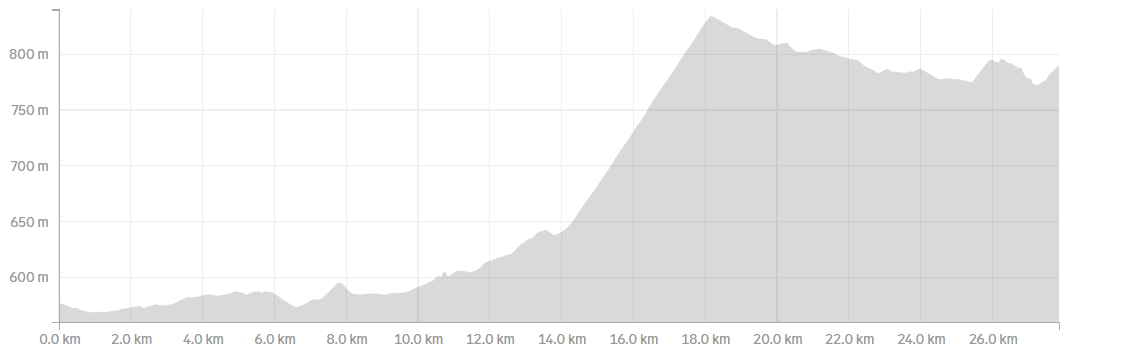
You could truly feel the spirit of the Waari during the 15–18 km Dive Ghat stretch. The climb was steep, the sun unforgiving. It took me nearly two hours to cover that hilly path. But just when my body began to falter, the energy around me soared. Devotees were dancing and singing with a kind of devotion that felt almost otherworldly. Their joy became my fuel; it lifted me when I was being tested the most.
As I approached the 28th kilometer towards Saswad, my feet should have been numb, but it was my eyes that gave away first. I could still hear hundreds chanting in harmony, and I realized: I hadn’t just walked to Saswad. I had walked back to myself.
The Waari isn’t just for the pious. It’s for the lost, the curious, the exhausted, the joyful, anyone who wants to see how strong the human spirit can be when it’s walking for something beyond itself. It’s not about reaching Vitthal, it’s about walking with him, step by step, chant by chant, rain or shine.
The Waari’s history exemplifies everlasting dedication, community, and the power of communal faith to last generations. It tells us that while God resides in temples, he also moves among the people, singing joyfully.
Nothing prepares you for the waari unless you soak it in the beautiful abhangs, singing, and footsteps of warkaris around you on the journey.
It’s not just a pilgrimage. It’s inheritance, not the kind written in wills, but the kind passed from voice to ear, from elder to child, surrounded by joy and devotion around you.
Vitthal Vitthal!
This walk was only possible due to my being part of the Sunday Hikers Group.
140 of us walked the Hadapsar-Saswad tappa and I cannot thank everyone enough for making it so special.
We are a family of health enthusiasts who have been hiking every Sunday since January 2022. If you live in the Pune region and health + fitness is a priority for you, I would encourage you to take a look at our website
For the lovely readers who love data, here it is:-